Rose State College President Travis Hurst outlined an ambitious vision for the College’s future during the 2026 State of Rose State address, showcasing a strategic transformation focused on student success, workforce development, academic innovation, and campus modernization.
Building on the College’s long-term Vision 2035 initiative, Hurst discussed how Rose State’s new strategic plan, Cleared for Takeoff, will guide the College toward becoming more innovative, accessible, and workforce-focused while preserving its commitment to affordability and student opportunity.
“Vision 2035 is our destination,” Hurst said. “Cleared for Takeoff is our flight plan. It turns that long-term vision into measurable priorities and action.”
The annual address brought together faculty, staff, students, elected officials, education leaders, business partners, and community supporters to reflect on the College’s progress and discuss its future direction.
A New Vision for Higher Education
A central theme of Hurst’s address was the College’s opportunity to develop a distinctive educational model that responds to Oklahoma’s evolving workforce needs.
Rather than following a traditional four-year university structure, Rose State aims to expand educational opportunities through stackable credentials, associate degrees, applied bachelor’s degrees, and seamless university transfer pathways.
“What Oklahoma needs is a different kind of institution,” Hurst said. “And I believe Rose State is uniquely positioned to become it.”
Hurst emphasized that this approach will maintain the College’s community college mission while providing students with more flexible opportunities to enter the workforce, advance their careers, and continue their education.
The College is exploring a meta-major approach that would organize academic programs into broader career pathways, helping students better understand how courses, credentials, and degrees connect to employment opportunities.
“Rose State has momentum,” Hurst said. “And momentum matters only if you know where you are going.”
The proposed model would also strengthen connections between academic programs and Oklahoma’s priority industries, including aerospace and defense, cybersecurity, artificial intelligence, healthcare, biotechnology, simulation technology, and advanced manufacturing.
Four Priorities Driving the Future
The Cleared for Takeoff strategic plan centers on four interconnected priorities:
- Student Experience: Creating clear educational pathways, strengthening student support services, and improving student success.
- Campus Infrastructure: Modernizing facilities, technology, and learning environments to meet evolving educational and workforce needs.
- Academics and Workforce Development: Aligning academic programs and credentials with emerging industries and employer demands.
- Bridges Across Campus: Strengthening collaboration among faculty, staff, students, academic divisions, and community partners.
Hurst emphasized that these priorities must work together to create meaningful institutional change.
The College’s developing Campus Master Plan will play a significant role in this transformation by identifying opportunities to renovate, modernize, and expand facilities to support academic innovation and workforce training.
Hurst also discussed the importance of strategic fundraising and partnerships with alumni, industry leaders, philanthropic organizations, and community supporters to help bring the College’s long-term vision to life.
“We cannot expect tomorrow’s students to prepare for the economy of tomorrow using yesterday’s infrastructure,” Hurst said.
Faculty and Students Help Shape the Future
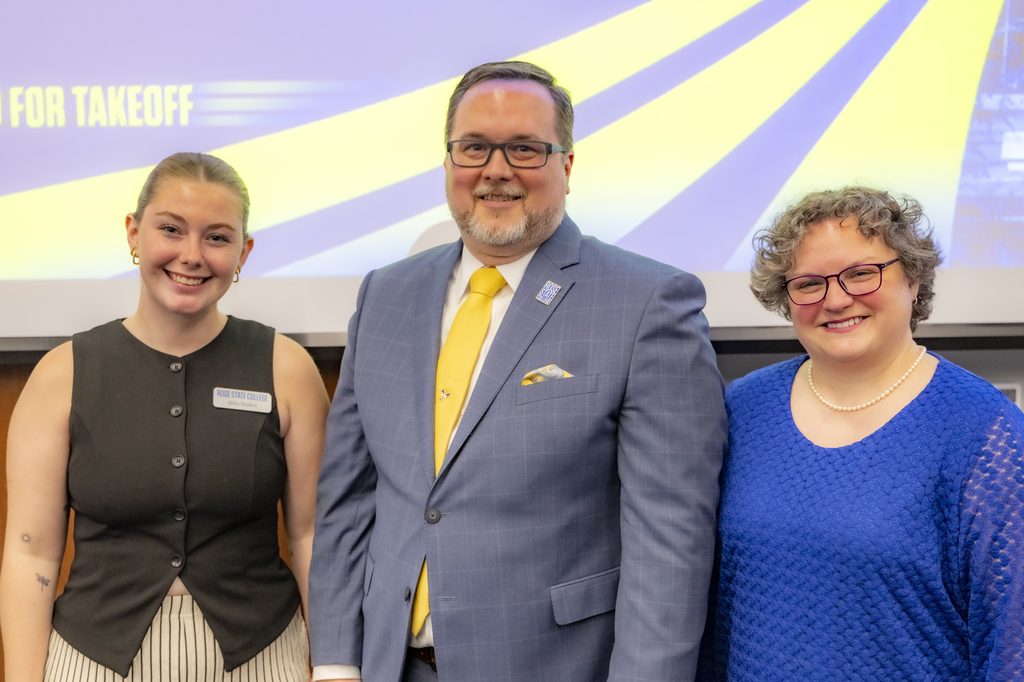
Faculty Senate President Lacey Veazey-Daniel and Student Senate President Abby Prufert also addressed attendees, emphasizing the importance of collaboration and shared leadership in shaping Rose State’s future.
Veazey-Daniel reflected on the impact community colleges have on students and the essential role faculty play in helping students discover opportunities and achieve their goals.
“But for faculty, a strategic plan can’t simply live on a page,” Veazey-Daniel said. “Ultimately, it has to come to life in our classrooms.”
She outlines how faculty contributed to the strategic planning process through listening sessions and discussions about the College’s strengths, challenges, and opportunities. She also emphasized the importance of continued faculty involvement as the College moves from planning to implementation.
Prufert shared the student perspective, expressing appreciation for the opportunities students have had to participate in shaping the College’s strategic direction.
“President Hurst and the College did not simply develop a plan for students,” Prufert said. “They invited students to help shape it.”
Prufert noted that Rose State provides opportunities for students to grow academically and personally while ensuring their voices are represented in decisions that affect their educational experiences.
Building Opportunities for a Lifetime
Throughout his address, Hurst reinforced that the College’s transformation is ultimately about creating opportunities for students at every stage of their educational and professional journeys.
The vision extends beyond earning a single degree or credential. Rose State aims to become a college students can return to throughout their lives for additional education, career advancement, and professional development.
Hurst also emphasized the importance of general education, noting that communication, critical thinking, problem-solving, and adaptability remain essential skills across all industries.
By connecting academic programs, workforce partnerships, student services, campus improvements, and strategic investments, Rose State is working toward a more integrated approach to higher education.
“Vision 2035 is our destination,” Hurst said. “Cleared for Takeoff is our flight plan. It turns that long-term vision into measurable priorities and action.”
As Rose State prepares for its next chapter, Hurst emphasized that the College’s success will depend on continued collaboration among students, employees, community partners, and supporters.
“Rose State College is ready for that challenge,” Hurst said. “Not because every decision has been made. But because we have greater clarity, alignment, and momentum around how we are going to get there.”